Home Organization & Decluttering
Create manageable routines for sorting, storing and maintaining everyday spaces. Work within your household’s needs, energy and physical ability; progress can be small and gradual.
0/6 lessons complete · Best assessment: 0% · Project pending
01 · Start small and define the purposeOpen lesson
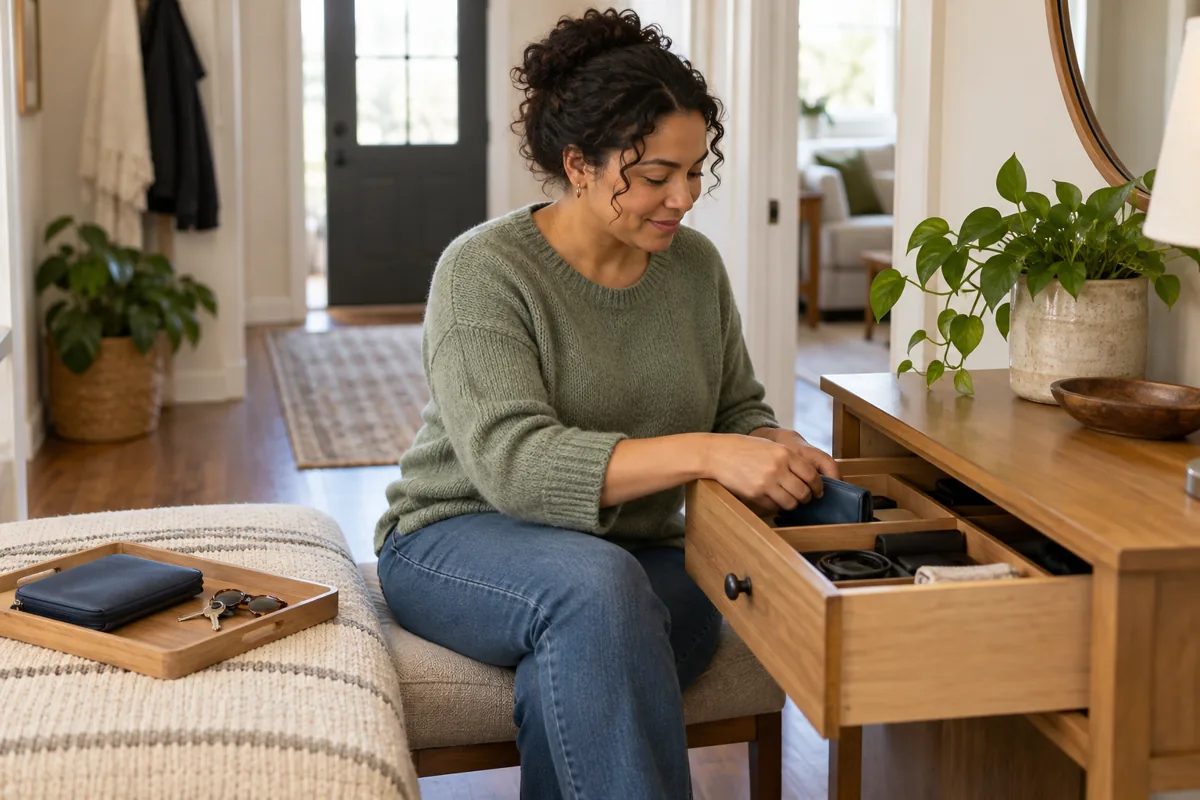
Choose a limited area and define what it should support. A drawer for everyday utensils has a different purpose from a shelf for occasional supplies. Decide what success looks like before emptying everything. Work for a realistic interval and leave the space safe and usable if you stop early.
Instead of reorganizing the entire kitchen, you choose one drawer and aim to make daily utensils easy to find.
Try it yourself
Pick one small area and write one sentence describing its purpose.
02 · Sort with practical decisionsOpen lessonLocked — complete previous lessons
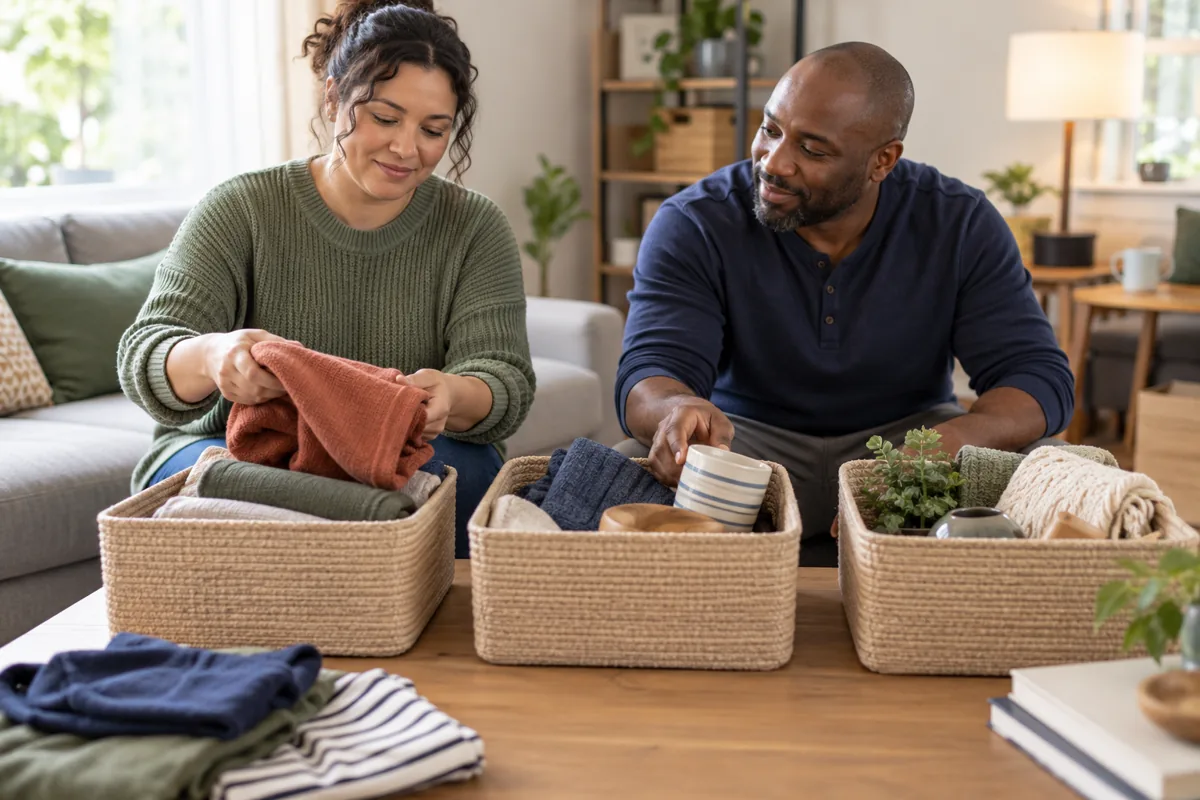
Useful sorting groups include keep here, relocate, donate or sell, discard or recycle, and undecided. Decide ownership before removing someone else’s items. An undecided container can reduce pressure, but give it a realistic review date. Dispose of chemicals, electronics and sensitive records through appropriate local methods instead of treating every item as ordinary trash.
A kitchen tool belongs nearby; a school notebook belongs elsewhere; an uncertain keepsake goes into a dated review box.
Try it yourself
Sort a fictional list of five household items and explain one undecided choice.
03 · Storage that matches useOpen lessonLocked — complete previous lessons
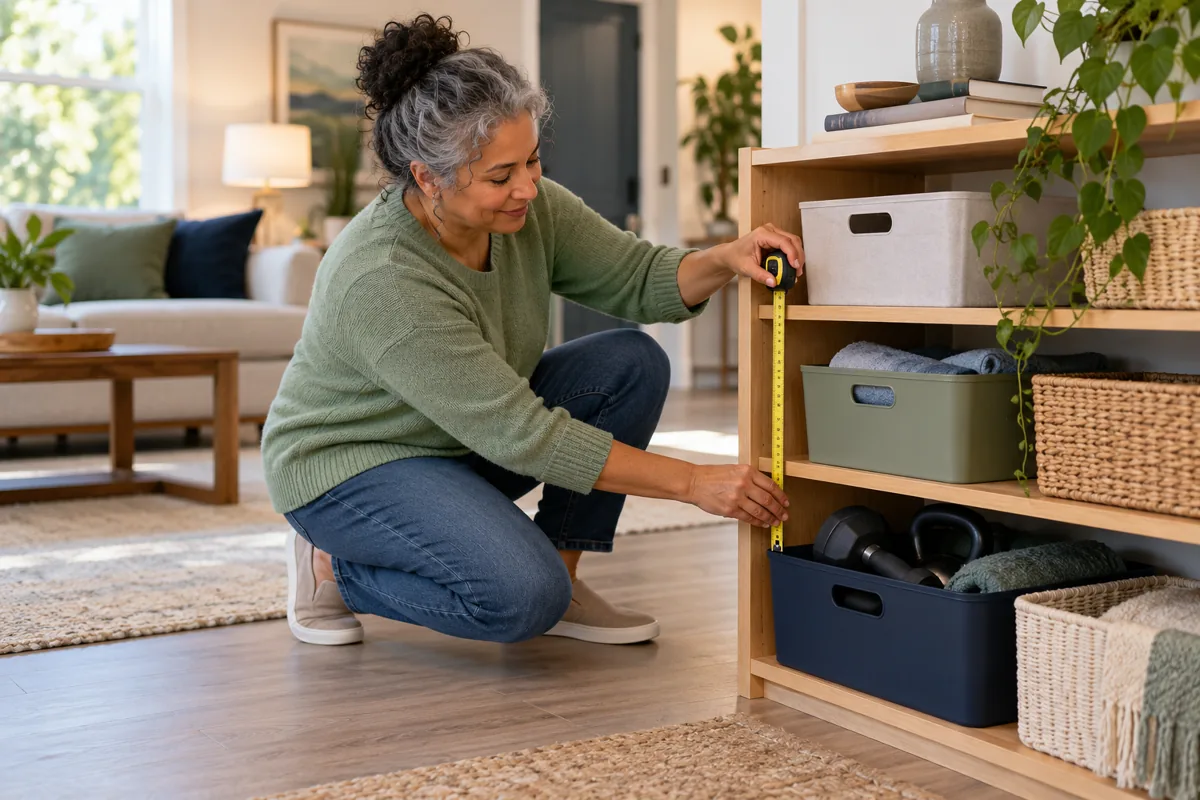
Store frequently used items where they are easy to reach and return. Group related items and use clear labels when they help. Measure the available space before buying organizers. Avoid unstable stacks, blocked exits or heavy items placed where lifting them is difficult. The best system works for the person using it, not only for a photograph.
Everyday mugs go on an easy-to-reach shelf; infrequently used lightweight items can occupy less convenient space.
Try it yourself
Identify two items that should move closer to their point of use.
04 · Paper and digital organizationOpen lessonLocked — complete previous lessons

Separate records that need action from references and items that can be safely discarded under relevant retention needs. Use consistent folder names and a simple filing rule. Protect private information and make backups of important digital records. Do not assume that clearing a folder or deleting an original is safe without checking what it contains and whether it must be kept.
A digital folder uses year and topic names; an action list records a pending bill without leaving private papers visible.
Try it yourself
Create a fictional folder structure for receipts, warranties and household reference information.
05 · Shared spaces and sustainable habitsOpen lessonLocked — complete previous lessons
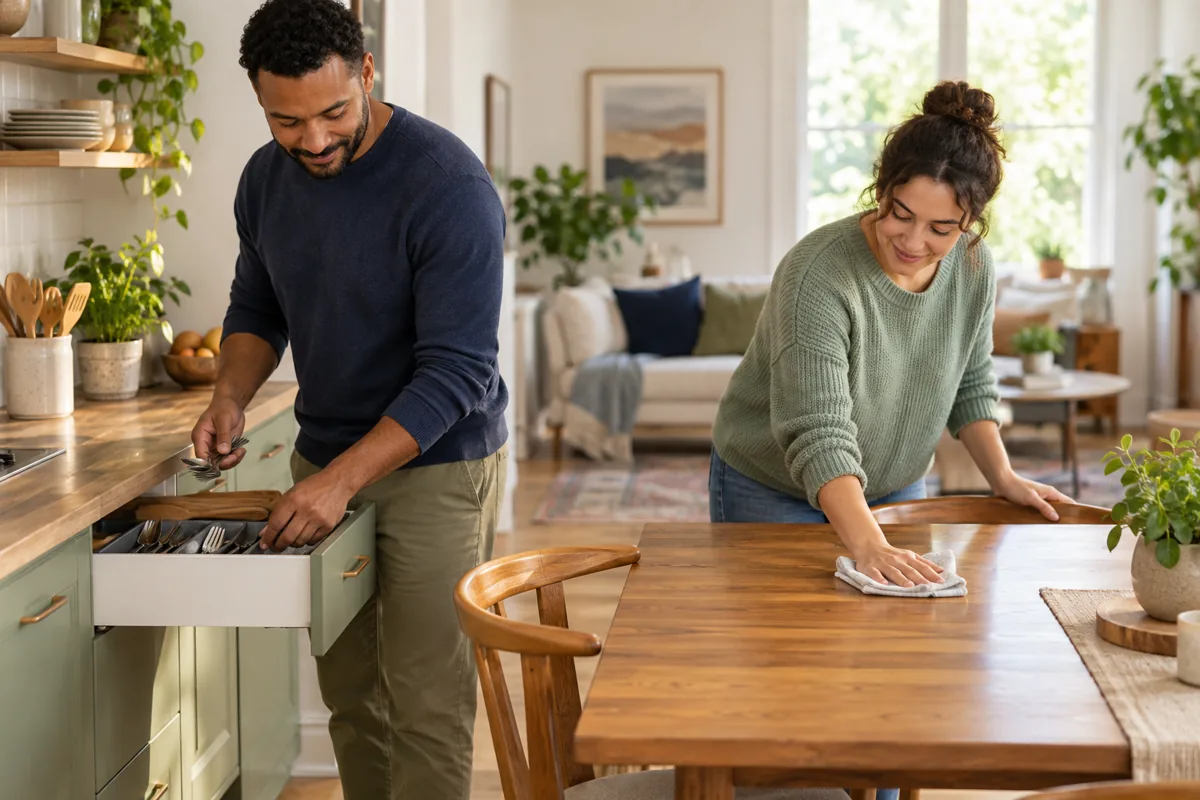
Agree on how a shared space should function and who maintains it. Different people may prefer different systems; test a simple arrangement before adding complicated rules. Make returning an item easy. A short reset tied to an existing routine can be more sustainable than occasional large cleanups. Adjust the system if it repeatedly fails.
A family places a small tray near the entry for keys and reviews whether it helps after a week.
Try it yourself
Choose one shared-space rule and one five-minute reset routine.
06 · Maintain, review and respect your limitsOpen lessonLocked — complete previous lessons
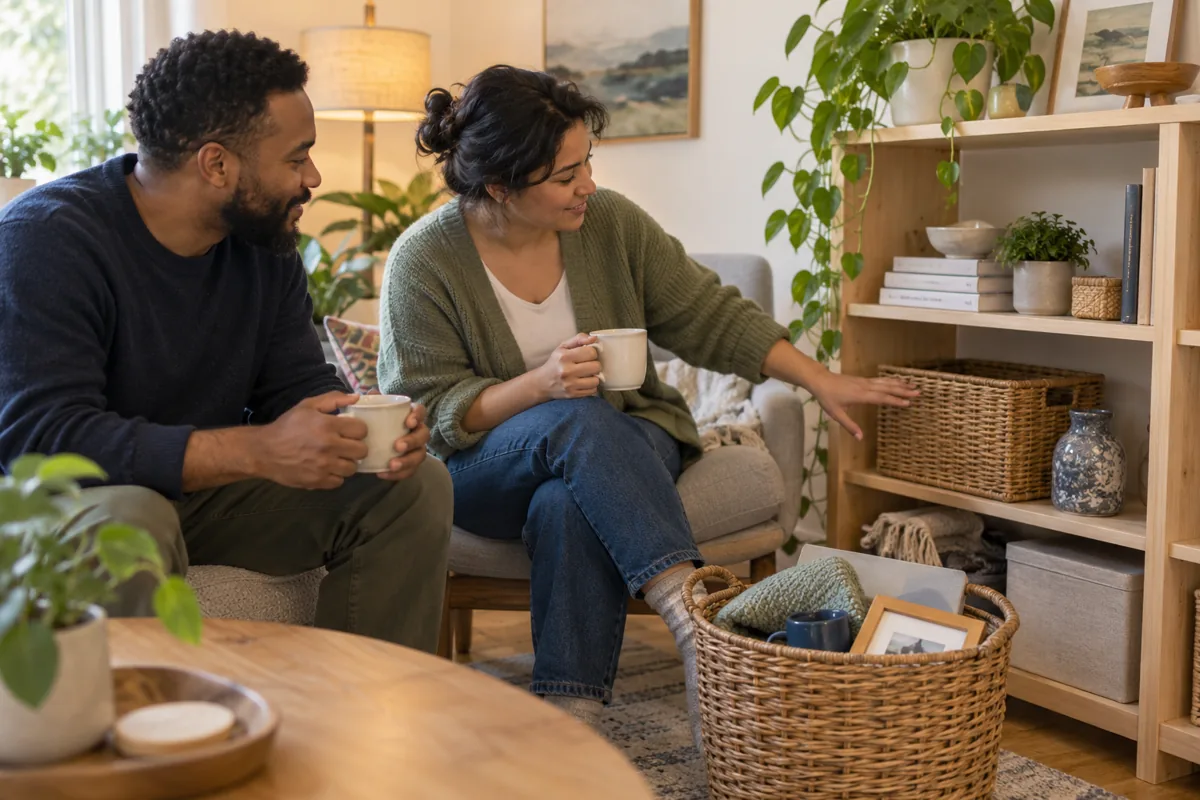
Review the area after using it for a few days. Keep what works and make one change at a time. Decluttering is not a competition, and emotional attachments can make decisions difficult. Pause when overwhelmed, ask for practical support when needed and avoid unsafe lifting or unstable furniture. Persistent serious difficulty deserves compassionate support, not shame.
A learner keeps the new utensil layout but removes a divider that makes larger tools hard to return.
Try it yourself
Complete your small-area project and plan a brief review next week.