questions are required on an approved California exam
CALIFORNIA FOOD HANDLER PREP
Protect every plate. Practice food safety.
Study eight complete lessons, practice safe kitchen work and receiving deliveries, and prepare with three original 40-question practice exams.
This free course is not an accredited food-handler program and cannot issue a California or San Diego County Food Handler Card. Complete the required course and exam through a provider accepted by your local authority.
is the minimum statutory passing score
is the general card validity period
is the general deadline after hire for covered workers
COMPLETE COURSE LESSONS
0/8 completeLearn the safety steps behind every shift
Open each lesson, study every section, then answer its knowledge check correctly to mark it complete.
1Your food-safety responsibility
Foodborne illness, contamination, the food handler’s role, and California card requirements.
Your food-safety responsibility
Foodborne illness, contamination, the food handler’s role, and California card requirements.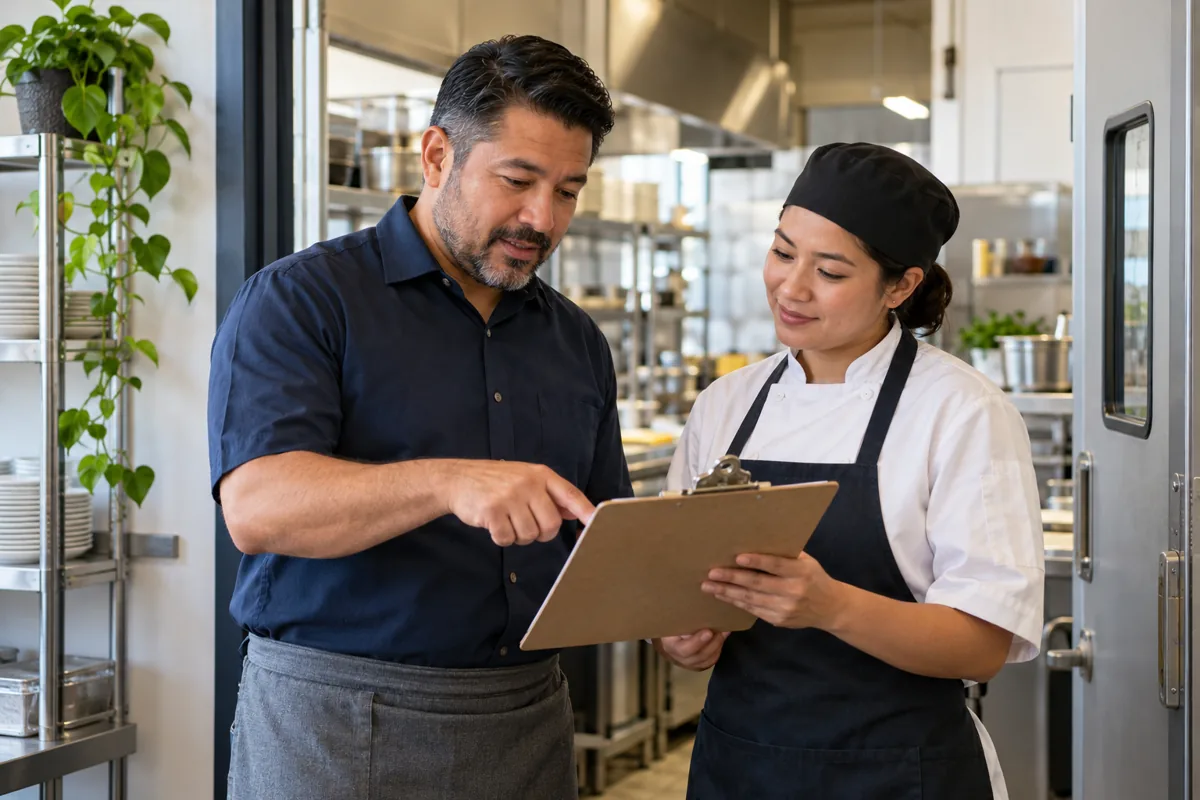
- Explain how food becomes unsafe
- Identify the five major risk factors
- Understand what this prep course can and cannot provide
Why food handlers matter
Food can carry disease-causing bacteria, viruses, parasites, toxins, chemicals, or physical objects. Unsafe food does not always look, smell, or taste spoiled, so appearance alone cannot prove that food is safe.
The major risk factors include poor personal hygiene, unsafe holding temperatures, inadequate cooking, contaminated equipment, and food from unsafe sources. A food handler interrupts these risks by following safe procedures every time—not only when a manager is watching.
California card basics
California law generally requires covered food handlers to obtain a valid card from an approved accredited provider within 30 days after hire. Cards are generally valid for three years, although local programs and statutory exceptions can apply.
The required approved course and examination contain at least 40 questions and use a minimum passing score of 70 percent. Since 2024, covered employers must treat the required training and examination time as paid work and pay necessary expenses associated with obtaining the card. Employment cannot be conditioned on already possessing one.
San Diego County is different
San Diego County maintains a local food-handler program. Workers should confirm that a card or test is accepted by the County rather than assuming every California course qualifies.
This LifeHelper course provides independent education and practice. It is not an accredited provider, does not administer the official examination, and cannot issue a Food Handler Card.
Incomplete
Pass the knowledge check to complete this lesson.2Employee health and personal hygiene
Illness reporting, work restrictions, wounds, clothing, hair restraints, and habits that protect customers.Locked — complete previous lessons
Employee health and personal hygiene
Illness reporting, work restrictions, wounds, clothing, hair restraints, and habits that protect customers.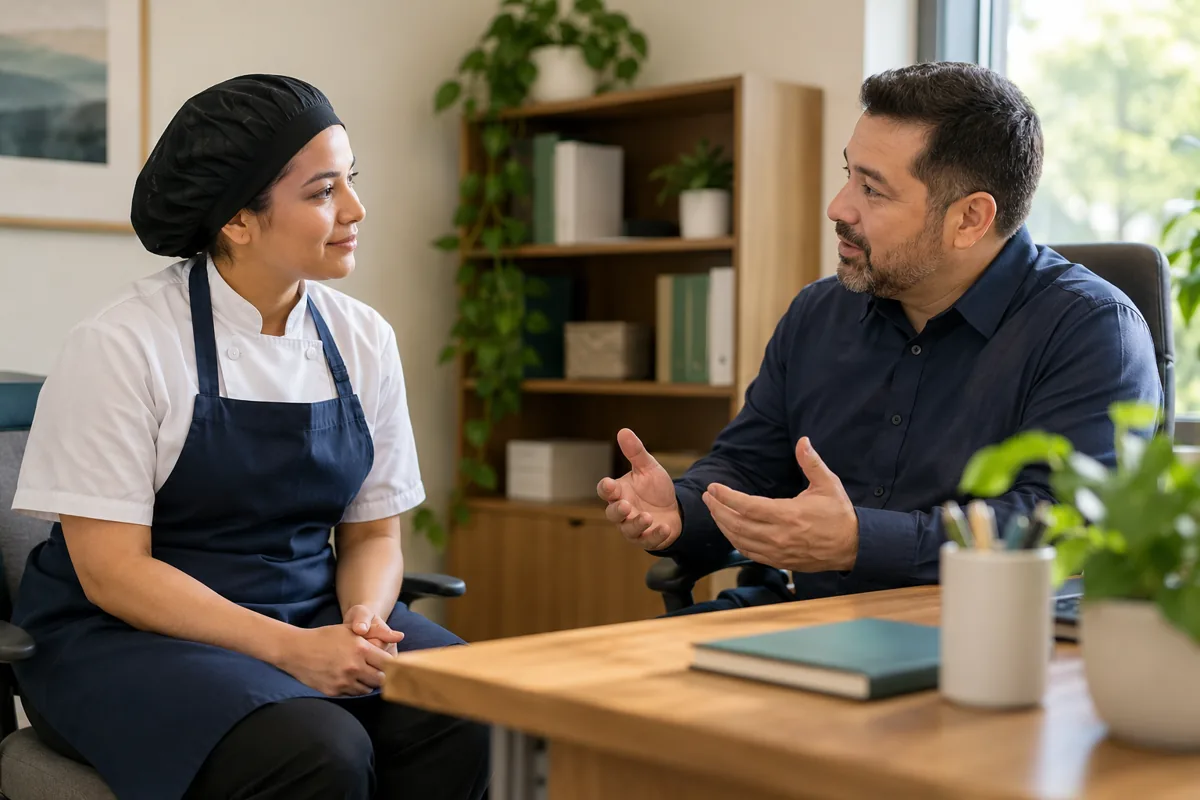
- Know when illness must be reported
- Protect wounds correctly
- Avoid personal practices that contaminate food
Report symptoms and diagnoses
Tell the person in charge when you have vomiting, diarrhea, fever with gastrointestinal symptoms, jaundice, a sore throat with fever, or another illness that may be transmitted through food. Never hide symptoms to avoid missing a shift.
Certain diagnosed illnesses require reporting and exclusion. The person in charge determines restrictions or exclusions under applicable rules and contacts the local authority when required. A food handler should not decide alone that feeling better makes it safe to return.
Wounds and clean appearance
An open or draining wound on a hand, wrist, or arm must be reported and protected. A hand wound requires an impermeable cover and a single-use glove. Lesions elsewhere require a dry, durable, tight-fitting cover.
Wear clean clothing, restrain hair and long beards, keep fingernails clean, and avoid jewelry on hands and arms except a plain ring when allowed. Aprons should be removed before using the restroom or taking out trash.
Safe behavior around food
Do not eat, smoke, or use tobacco in food-preparation areas. Use a covered drink container in an approved location. Turn away from food when coughing or sneezing, then wash hands before returning to work.
Ready-to-eat food receives no further cooking to destroy germs. Minimize bare-hand contact by using clean utensils, deli tissue, or properly used single-use gloves.
Incomplete
Pass the knowledge check to complete this lesson.3Handwashing and glove use
When and how to wash, glove changes, hand sinks, and why sanitizer does not replace washing.Locked — complete previous lessons
Handwashing and glove use
When and how to wash, glove changes, hand sinks, and why sanitizer does not replace washing.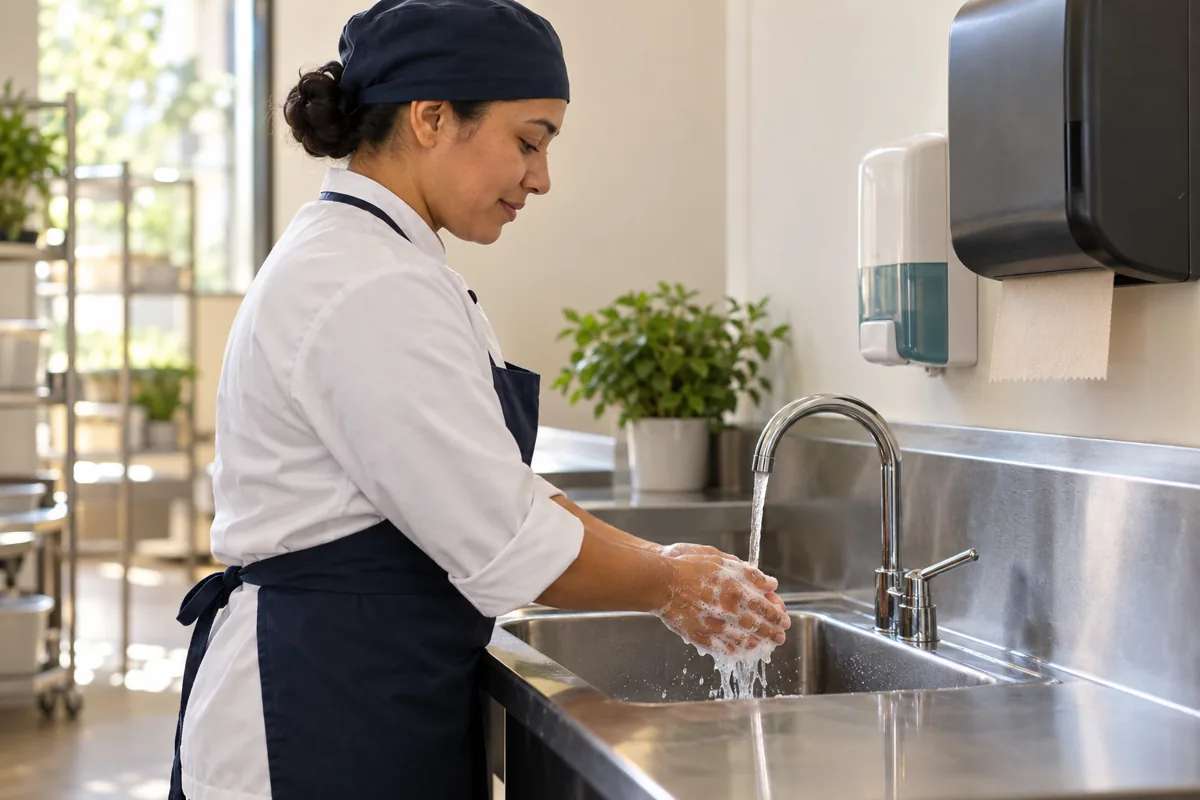
- Perform correct handwashing
- Recognize every required glove change
- Keep handwashing facilities available
Wash at the right times
Wash before starting food work and before putting on gloves. Wash after using the restroom, touching your face or hair, coughing, sneezing, eating, smoking, handling raw animal food, taking out trash, cleaning, touching dirty dishes, using a phone, or changing tasks.
Hands can look clean and still carry pathogens. Hand sanitizer may be used only after proper handwashing; it does not replace soap, running water, rubbing, rinsing, and drying.
Use the hand sink correctly
Use the designated handwashing sink with warm running water and soap. Scrub hands and exposed portions of the arms vigorously for at least 10 to 15 seconds, including between fingers and under nails. Rinse and dry with a single-use towel or approved hand dryer.
Never wash hands in a food-preparation or warewashing sink. Do not block a hand sink or use it to dump drinks, thaw food, store utensils, or fill sanitizer buckets.
Gloves are not magic
Wash and dry hands before putting on single-use gloves. Change gloves whenever hands would need washing, when the gloves tear or become contaminated, when moving from raw food to ready-to-eat food, and after interruptions.
Never wash or reuse single-use gloves. Remove them before using the restroom and discard them. Gloves protect food only when clean hands and correct task changes support them.
Incomplete
Pass the knowledge check to complete this lesson.4Prevent contamination and protect allergens
Cross-contamination, storage order, ready-to-eat food, chemicals, physical hazards, and the nine major allergens.Locked — complete previous lessons
Prevent contamination and protect allergens
Cross-contamination, storage order, ready-to-eat food, chemicals, physical hazards, and the nine major allergens.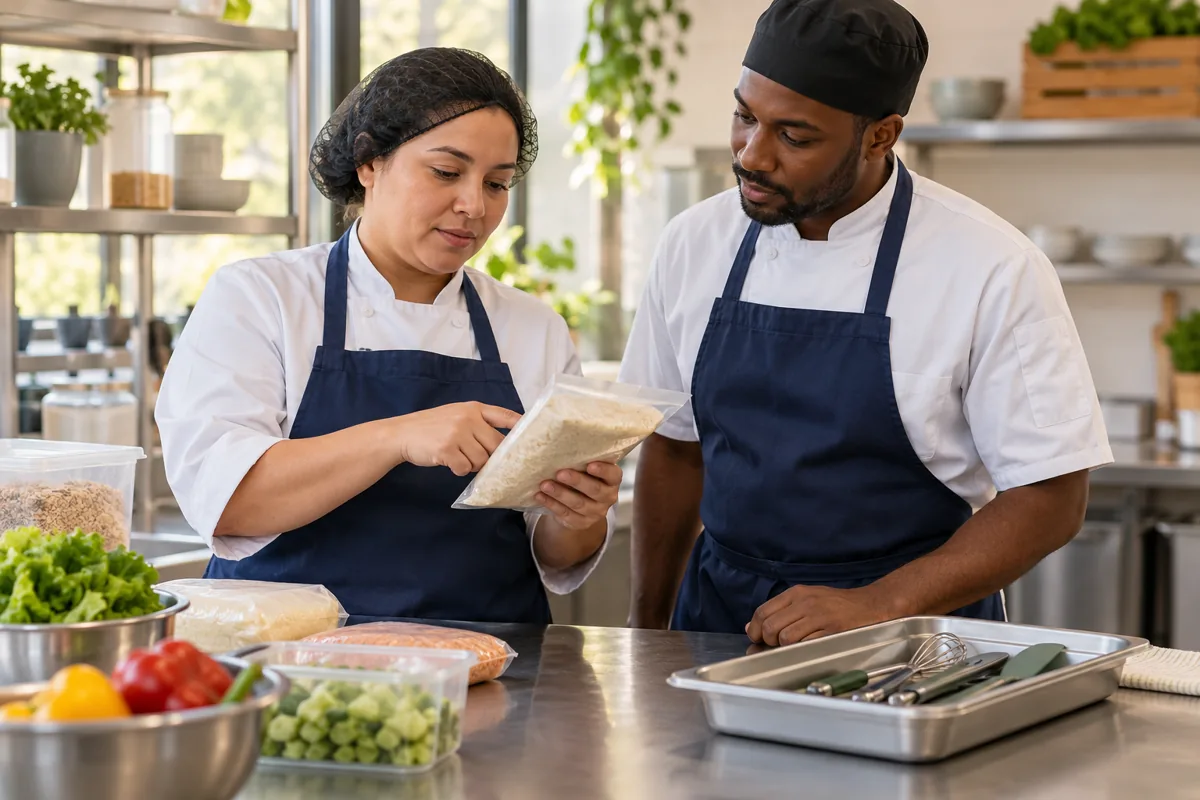
- Separate raw and ready-to-eat food
- Prevent allergen cross-contact
- Store chemicals and food safely
Stop cross-contamination
Keep raw animal foods separate from cooked and ready-to-eat foods during receiving, storage, preparation, and service. Store ready-to-eat food above raw food. When practical, store raw products by required cooking temperature, with poultry below foods requiring lower final temperatures.
Use separate equipment or clean and sanitize food-contact surfaces between tasks. Wash produce in the food-preparation sink, and clean and sanitize the sink before it is used for a different task.
Food allergens
The nine major allergens are milk, eggs, fish, crustacean shellfish, tree nuts, peanuts, wheat, soybeans, and sesame. A tiny amount may cause a severe reaction in a sensitive customer.
When an allergy is reported, notify the person preparing the meal. Wash hands, use clean and sanitized equipment and surfaces, check every ingredient and label, avoid cross-contact, and never guess. If the operation cannot prepare the item safely, tell the customer honestly. Call 911 for a severe reaction.
Chemical and physical hazards
Keep chemicals labeled and stored away from food, equipment, utensils, linens, and single-use items. Follow label directions and never mix chemicals such as bleach and ammonia. Never place chemicals in food containers or food in chemical containers.
Protect food from glass, metal fragments, staples, hair, bandages, dirt, and other physical objects. Keep lights shielded where required, remove staples from boxes safely, and discard food exposed to broken glass or another uncontrolled hazard.
Incomplete
Pass the knowledge check to complete this lesson.5Time and temperature control
TCS foods, safe holding, thermometers, the danger zone, and time as a public-health control.Locked — complete previous lessons
Time and temperature control
TCS foods, safe holding, thermometers, the danger zone, and time as a public-health control.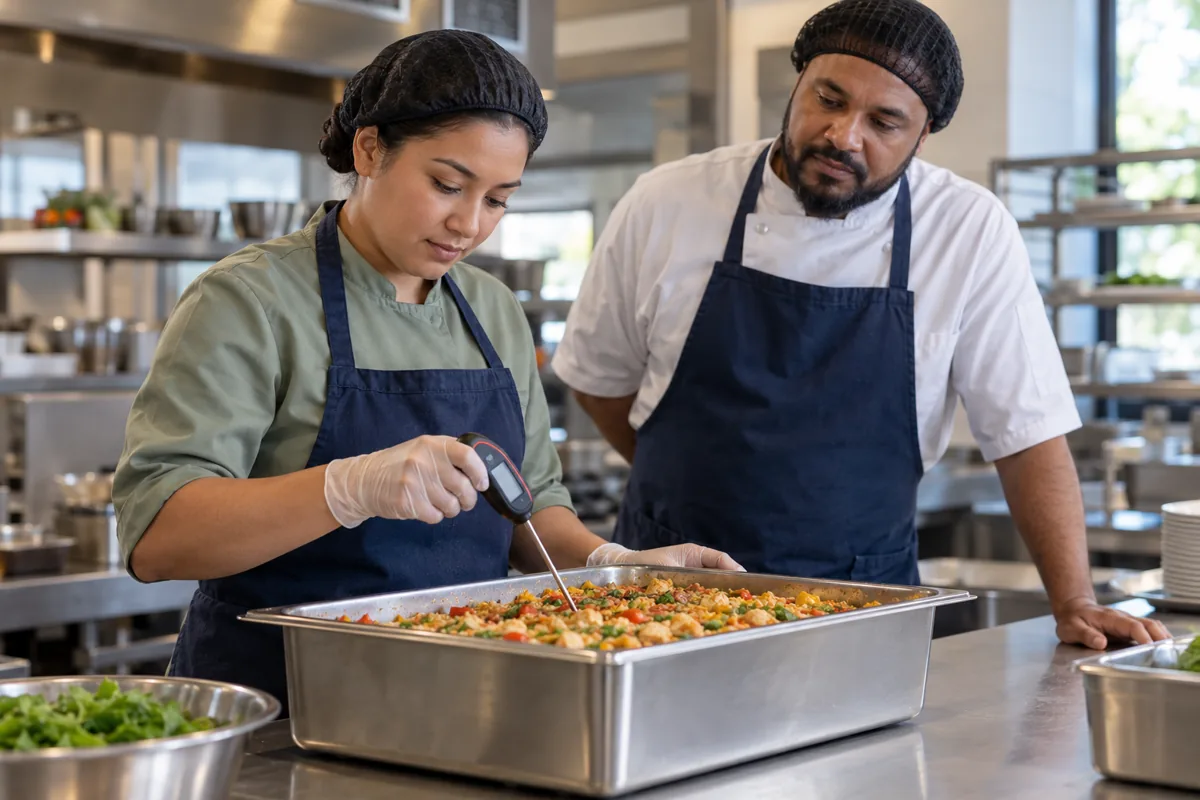
- Recognize TCS food
- Apply 41°F and 135°F holding limits
- Measure food temperatures correctly
Recognize TCS food
Time/temperature control for safety food supports rapid pathogen growth when temperature is uncontrolled. Examples include meat, poultry, fish, eggs, dairy products, cooked rice, cooked pasta, cooked vegetables, tofu, sprouts, cut melons, cut tomatoes, and many garlic-in-oil mixtures.
Dry crackers and many unopened commercially processed shelf-stable foods do not require temperature control until their condition changes. When uncertain, ask the person in charge and follow the facility’s approved procedure.
Hold food safely
Keep cold TCS food at 41°F or below and hot TCS food at 135°F or above unless an authorized exception or approved time-control procedure applies. The range between those limits supports rapid pathogen growth and should be minimized.
Check internal food temperature rather than relying only on an equipment display. Insert a clean, sanitized probe into the thickest part or center, avoid bone and the container surface, and check more than one location when necessary.
Thermometer accuracy and logs
Use the correct thermometer for the food’s thickness. Clean and sanitize the probe before and after each use. Calibrate according to manufacturer instructions and whenever accuracy is questioned, such as after a drop.
Temperature logs help reveal unsafe trends early. If food is outside its limit, follow the operation’s corrective-action policy instead of changing the written number or simply moving the food and forgetting the exposure time.
Incomplete
Pass the knowledge check to complete this lesson.6Cook, cool, thaw, and reheat safely
Minimum internal cooking temperatures, two-stage cooling, approved thawing, and rapid reheating.Locked — complete previous lessons
Cook, cool, thaw, and reheat safely
Minimum internal cooking temperatures, two-stage cooling, approved thawing, and rapid reheating.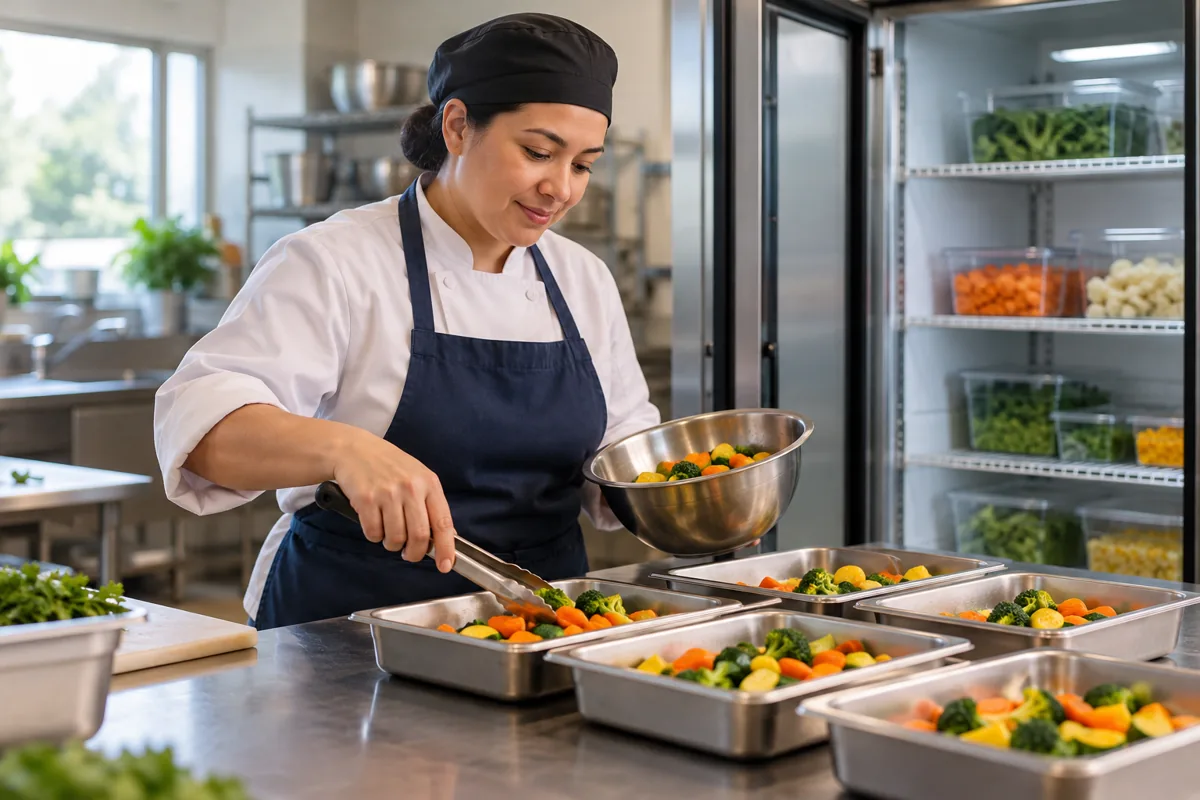
- Match foods to cooking temperatures
- Apply the two-stage cooling rule
- Choose approved thawing and reheating methods
Required internal temperatures
For this course, remember common California minimums: 145°F for 15 seconds for fish, shell eggs for immediate service, and single pieces of meat; 155°F for 15 seconds for ground or comminuted meat and raw eggs held for later service; and 165°F for 15 seconds for poultry, stuffed foods, and stuffing containing animal foods.
Measure the internal temperature in the thickest part. Cooking equipment temperature, color, texture, grill marks, or clear juices do not replace a calibrated thermometer.
Cool rapidly in two stages
Cool cooked TCS food from 135°F to 70°F within two hours, then from 70°F to 41°F or below within a total of six hours. If the first stage is missed, prompt corrective action is needed; more time in the second stage does not repair an unsafe first stage.
Use shallow pans, smaller portions, ice baths with stirring, ice paddles, rapid-cooling equipment, or ice as an ingredient. Keep cooling containers loosely covered or uncovered when protected from overhead contamination so heat can escape.
Thaw and reheat correctly
Approved thawing methods include refrigeration, fully submerged under running water at 70°F or below within required time limits, in a microwave when followed by immediate cooking, or as part of cooking. Never thaw TCS food on a counter at room temperature.
Food cooked and cooled in the facility for hot holding must generally be rapidly reheated to 165°F. A steam table is designed to hold hot food, not to reheat it rapidly. Stir microwave-reheated food, cover it, and allow the required standing time.
Incomplete
Pass the knowledge check to complete this lesson.7Receiving, storage, preparation, and service
Approved sources, delivery checks, date marking, stock rotation, safe storage, and service practices.Locked — complete previous lessons
Receiving, storage, preparation, and service
Approved sources, delivery checks, date marking, stock rotation, safe storage, and service practices.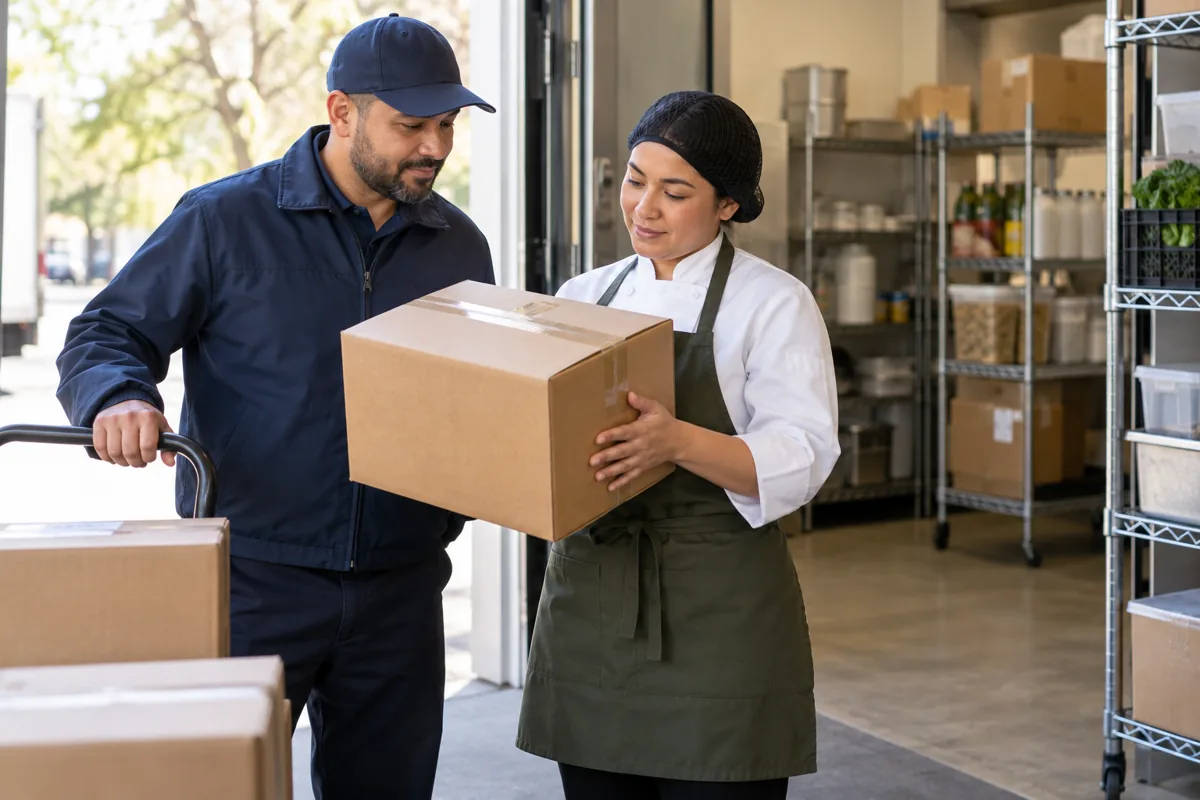
- Reject unsafe deliveries
- Store food in a protective order
- Protect food during preparation and service
Receive only safe food
Buy food from approved, regulated sources. Inspect deliveries for safe temperatures, intact packaging, labels, pest evidence, contamination, spoilage, swollen or leaking cans, and signs of thawing and refreezing. Reject food that does not meet requirements.
Shellstock tags identify the source and harvest information for shellfish and must remain with the container until empty, then be retained for the required period. Keep invoices and source records so food can be traced during an illness investigation or recall.
Store and rotate
Store food covered, labeled when required, and at least six inches above the floor. Use first-in, first-out rotation and follow date-marking rules for refrigerated ready-to-eat TCS foods prepared or opened in the facility.
Keep raw animal food below ready-to-eat food and separate types to prevent leakage. Store utensils and single-use items where splash, dust, chemicals, customers, and pests cannot contaminate them.
Prepare and serve safely
Use clean utensils to handle ready-to-eat foods and ice. Never scoop ice with a glass or bare hands. Hold plates by the bottom or edge, cups by the base or handle, and flatware by the handle.
Protect displayed food with covers, sneeze guards, packaging, or other barriers. Replace a contaminated utensil immediately and never return food served to one customer for service to another except for protected, unopened packages where permitted.
Incomplete
Pass the knowledge check to complete this lesson.8Cleaning, sanitizing, facilities, and pests
Clean versus sanitized, three-compartment sinks, sanitizer strength, air drying, wiping cloths, garbage, and pest prevention.Locked — complete previous lessons
Cleaning, sanitizing, facilities, and pests
Clean versus sanitized, three-compartment sinks, sanitizer strength, air drying, wiping cloths, garbage, and pest prevention.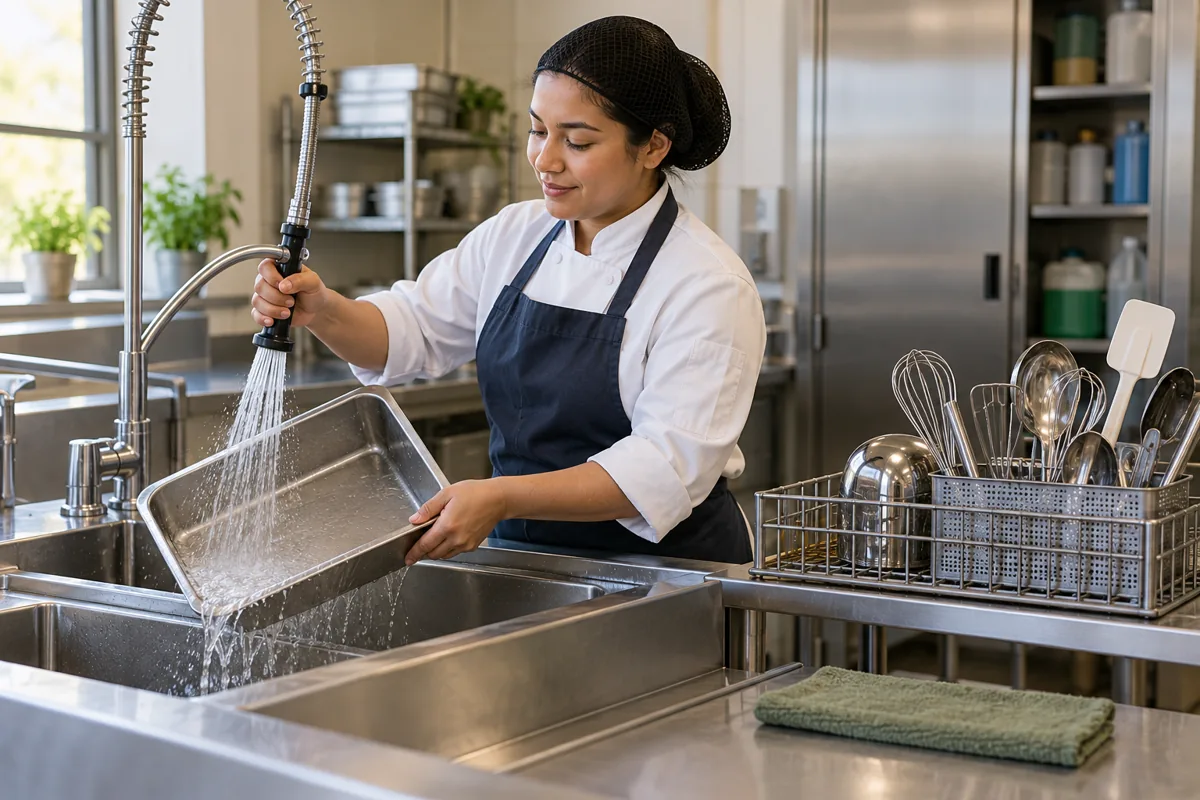
- Use the correct warewashing sequence
- Test sanitizer correctly
- Remove conditions that attract pests
Clean, then sanitize
Cleaning removes food, grease, and soil. Sanitizing reduces pathogens on an already clean food-contact surface. Sanitizer cannot work reliably through leftover food or detergent, so these steps are separate and must remain in order.
In a three-compartment sink: scrape or preclean, wash, rinse, sanitize for the required concentration and contact time, then air dry. Do not towel dry because towels can recontaminate clean equipment.
Use sanitizer safely
Prepare chemical sanitizer according to the product label and facility procedure. Use the correct test strips to measure concentration, and check it regularly. Too little may not sanitize; too much can create a chemical hazard.
Store in-use wiping cloths in the correct sanitizer solution between uses. Keep separate cloths for raw-animal-food areas when required and replace dirty solution. Never use wiping-cloth sanitizer for handwashing or food.
Control garbage and pests
Remove garbage often enough to prevent odors, overflow, and pest attraction. Keep containers covered when required, clean spills, and maintain the refuse area. Never carry leaking trash through clean food areas without containing it.
Deny pests food, water, shelter, and entry. Keep doors closed, repair screens and gaps, store food off the floor, clean under equipment, and report droppings, gnaw marks, insects, or damaged packages immediately. Only approved pest-control methods may be used.
Incomplete
Pass the knowledge check to complete this lesson.INTERACTIVE JOB PRACTICE
Receiving a Food Delivery Simulator
You are opening a restaurant for the morning shift. Inspect eight delivered foods, take temperatures, and decide what can safely enter the kitchen.
Approved sourcesTemperaturesPackagingLabelsAccept or reject
INTERACTIVE KITCHEN PRACTICE
Cross-Contamination Simulator
Work through four kitchen stations. Choose the actions that keep raw food, dirty equipment, and allergens away from ready-to-eat meals.
Hands and glovesEquipmentStorageAllergen cross-contact
PRACTICE EXAM CENTER
Three 40-question practice exams
Answer every question, submit your exam, and review explanations for anything missed. The questions are original LifeHelper practice—not an official provider examination.
40 questions · 70% practice benchmark · complete missed-answer review
40 questions · 70% practice benchmark · complete missed-answer review
40 questions · 70% practice benchmark · complete missed-answer review
OFFICIAL RESOURCES
Finish through an accepted provider
Requirements and accepted providers can vary locally. San Diego County specifically advises workers to confirm that training is accepted by the County.
EDUCATIONAL PRACTICE
Preparation—not certification.
LifeHelper Tips is independently operated and is not an accredited food-handler training provider. This course does not replace required employer training, local requirements, an approved examination, or instructions from the person in charge or health authority.